Asian Unity
Shariq Ali
Valueversity
During those days, we were living in Cardiff. My youngest son, Sameed, must have been around two and a half to three years old. His two older siblings were already going to school, and Sameed often insisted on going as well. Seeing his enthusiasm, we enrolled him in a Head Start nursery.
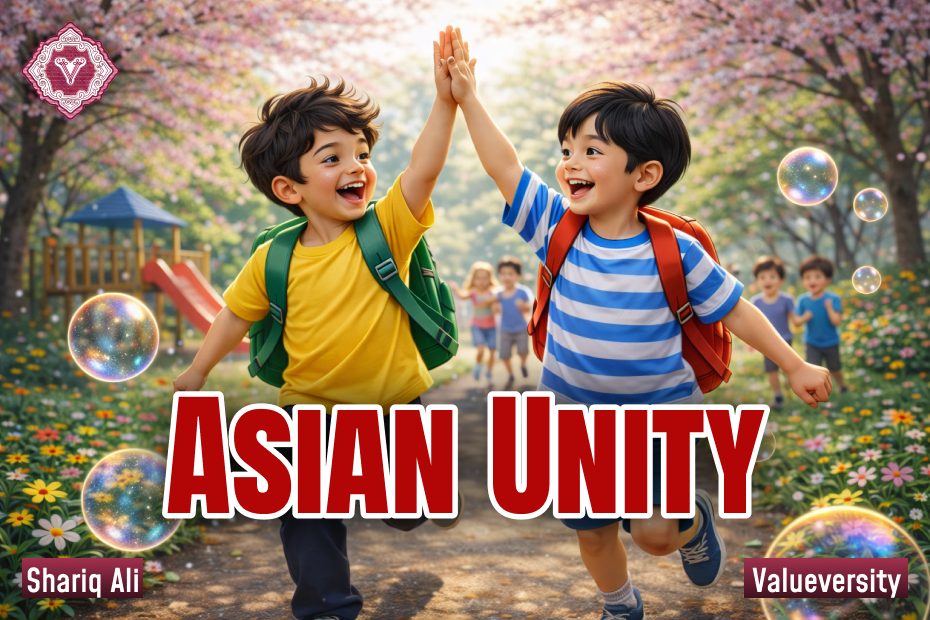
At this nursery, Sameed’s dearest friend was Kota—a child of similar height and build, with distinctly expressive Japanese features. Kota, too, was deeply devoted to this friendship. The two were almost inseparable. They played together and often engaged in innocent mischief side by side.
Whenever Sameed’s mother or I went to pick him up from the nursery, we would spend a few minutes chatting with Kota’s parents, who would also be waiting. Kota would speak about Sameed at home with as much excitement as Sameed spoke about Kota.
This friendship brought us parents closer as well. We would often compare Pakistani and Japanese cultures, sharing many fascinating insights. The Japanese bow was likened to our traditional gesture of aadab. Conversations would drift toward food—biryani and qorma on one side, and sushi, sashimi, and tempura on the other.
When Sameed and Kota sat together in the nursery, their mischief also doubled. Once, the two of them secretly painted a cardboard display house in the classroom with their favorite colors, escaping the teacher’s notice.
On another occasion, they filled the entire classroom with soap bubbles, spreading a wave of joy among all the children.
Most of the children in the nursery were English and Welsh, who were generally a bit more boisterous. At times, when things tilted toward mild physical bullying, Sameed and Kota’s “Asian alliance” would come together to defend themselves and successfully repel these “European attacks.”
Whenever guests visited our home, young Sameed would be called upon. He would recite a poem and, when asked, proudly mention his favorite dish—biryani—and his best friend, Kota.
When Sameed and Kota graduated from nursery, a group photograph was taken—one that still rests محفوظ (safely preserved) in our family album.
The tragedy is that Sameed no longer remembers Kota’s face, nor these stories. Perhaps Kota doesn’t remember either. But that nursery graduation photograph still remembers their friendship.
Childhood friendships and moments are so precious—one should ask that photograph.