A Journey of Love
“A piece inspired by Sonia Gandhi’s book.”
Shariq Ali
Valueversity
On my first visit to India, I stayed at a guesthouse in Vasant Kunj, a neighbourhood in Delhi. The family who owned the spacious house lived there too, renting out just a few rooms to a small number of guests.
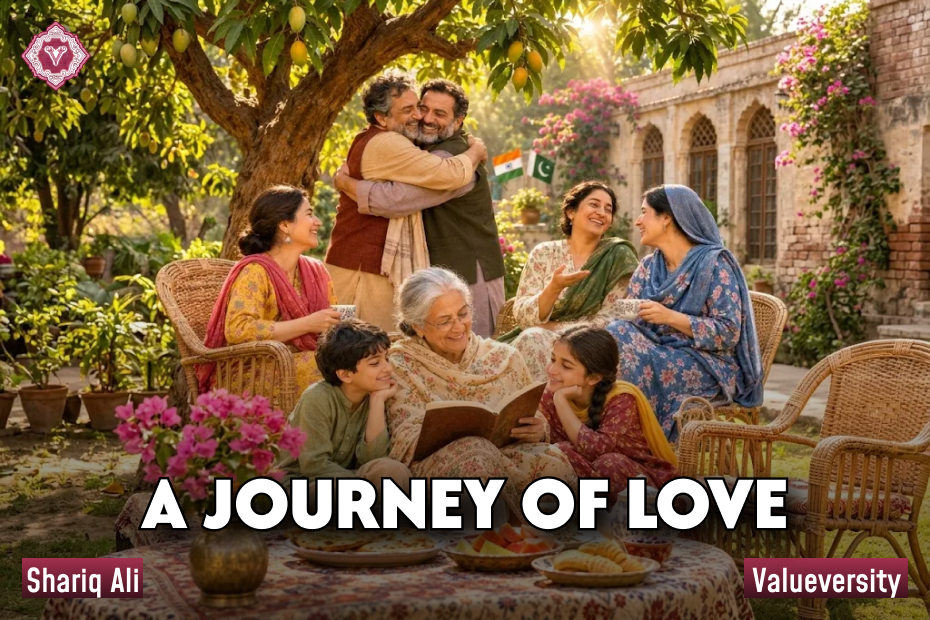
One delightful Delhi morning, we were sitting on the lawn, enjoying a breakfast of potato bhujia, spiced scrambled eggs, chole bhature and tea. Nearby stood an old mango tree, with parrots perched on its branches. Beneath it, the lady of the house sat on a gently swaying garden swing with her child, who was about five or six.
She had a book open and was reading to the child. Her Urdu was so clear, and her manner of speaking so graceful, that I could not help listening. When we began talking, I mentioned that I had come from Pakistan. The familiar language, manners and household customs brought a sense of belonging, even in an unfamiliar city. I felt as though I were staying with someone I already knew.
When I read about Sonia Gandhi’s memoir, Belonging: A Journey of Love, that morning in the Delhi house came back to me.
At the book’s launch in Delhi on 16 November 2026, Rahul Gandhi shared a story. During his time in Cambridge, he had once visited the Varsity restaurant, where his parents had first met. He still remembered its yellow door. When he told someone there that his parents had met in that very place, the man immediately recognised who they were. A son had come to see where his parents’ story had begun.
It was in that small Greek restaurant in Cambridge that Sonia and Rajiv’s journey of love began. Their friendship deepened, and they married in 1968. After moving from Italy to India, Sonia needed time to become familiar with the ways of her new home. The food was unfamiliar too, and she was initially wary of the chillies and spices. Gradually, however, dal and rice came to taste like home. In a conversation with Priyanka, she recalled that arhar dal had been a regular part of their family meals.
Reading this, I remembered that breakfast in Delhi. In our own homes, too, so many memories are tied to the aroma of food: a mother’s dal, breakfast on a leisurely morning, the care taken to prepare a guest’s favourite dish. In homes across India and Pakistan, love finds such similar expressions in everyday life.
Then came the tragedy of Rajiv Gandhi’s assassination in 1991. Through that terrible time, Rahul and Priyanka supported their mother. Remembering those days at the book’s launch, Sonia said, “I had become the child, and they had become my parents.”
According to Rahul, his mother could not fully remember many of the events surrounding that tragedy. Years later, as she wrote her memoir, Priyanka’s recollections helped her piece together an account of that period. The daughter her mother had once cared for was now helping to preserve her mother’s memories.
The book also includes a photograph of Sonia and Rajiv from Priyanka’s personal collection. Sonia describes it as her favourite photograph of herself with Rajiv. A son went looking for the place where his parents first met, and a daughter sat beside her mother, helping her preserve the family’s joys and sorrows in words.
These stories bring to mind so many homes around me. In one, children are looking through their parents’ wedding photographs. In another, a mother falls silent while speaking of someone she has lost, and her daughter comes to sit beside her. At such moments, even the words of comfort are often much the same.
When I think of the heritage India and Pakistan share, I remember these domestic scenes alongside our language, literature and music. On both sides, mothers tell their children stories, fathers worry about their futures, and children grow up to become a source of support for their parents. When we look closely at one another’s lives, so much feels familiar. Perhaps that familiarity can open a path towards mutual respect and love.
On that Delhi lawn, a mother was explaining a story to her child in my own language. Years later, in Sonia’s memoir, a daughter is helping her mother complete her story. Somewhere between those two scenes, I recognise my own home.
The journey of love continues in this way too. Sometimes a mother tells her child a story. And sometimes that same child grows up to keep the mother’s story safe.