Theatre of the Absurd: What Is the Meaning of Life?
Shariq Ali
Valueversity
Imagine a scene.
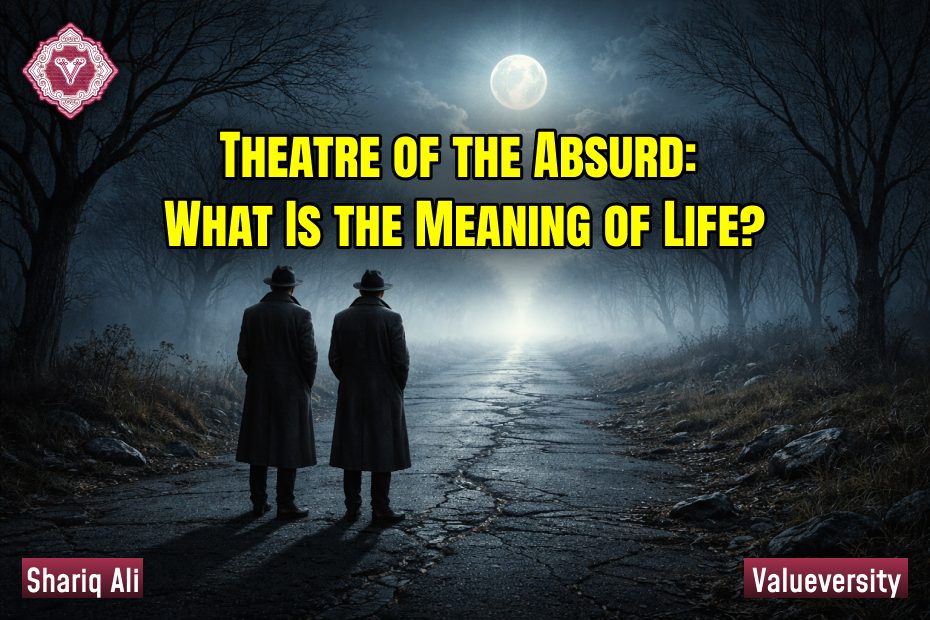
Two men stand on a deserted road, waiting for someone.
Time passes. Dialogues are spoken—fragmented, incomplete, almost meaningless…
And in the end, we realize that the one they were waiting for will never arrive.
This strange scene belongs to the world of the Theatre of the Absurd.
This form of theatre emerged after the Second World War, a time when humanity had lost so much—hope, certainty, and perhaps even a clear sense of purpose.
A haunting question began to echo in people’s minds:
Why are we here?
From this very question arises another philosophy known as Existentialism.
In simple terms, existentialism suggests that life does not come with a pre-defined meaning.
We create meaning ourselves—through our choices, our actions, and our attitudes.
The French thinker Albert Camus described this condition as the “Absurd.”
Human beings search for meaning, yet the universe responds with silence.
This very clash gives rise to a deep sense of meaninglessness.
This idea found powerful expression in drama through
Samuel Beckett’s famous play Waiting for Godot, where characters wait endlessly—for an answer that never comes.
Theatre of the Absurd does not tell a conventional story.
It evokes a feeling.
A feeling that, at times, we keep searching for direction in life, yet no clear answers appear.
And perhaps, hidden within this realization, there is a quiet hope:
If life does not give us meaning…
It does give us the freedom to create one.