The Valley of Bamiyan: A Confluence of Civilizations
Shariq Ali
Valueversity
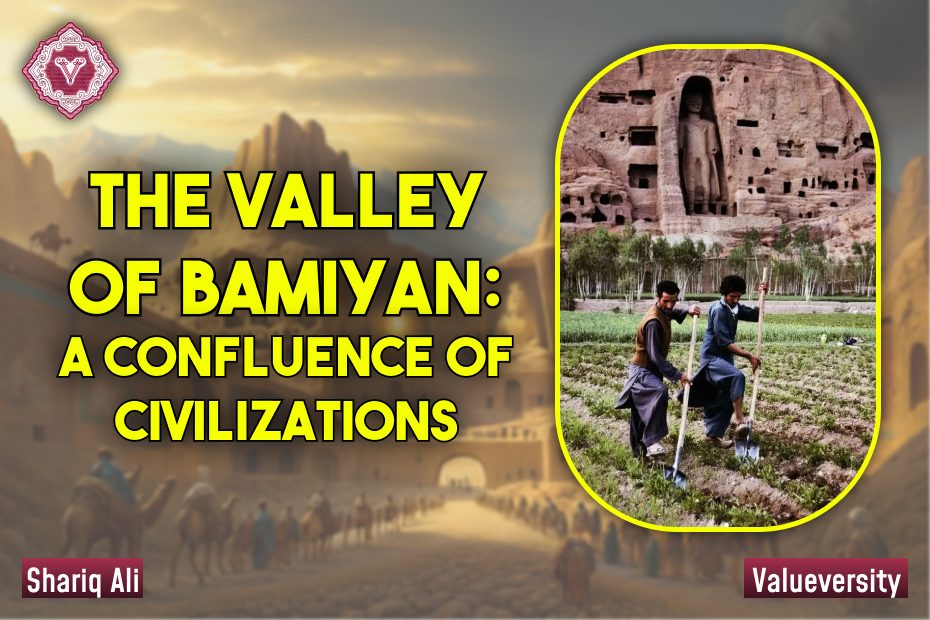
Located in central Afghanistan, nestled among the Hindu Kush mountains, Bamiyan is not merely a valley but a living symbol of civilizational dialogue. Centuries ago, this was a place through which caravans of the Silk Road passed. Different languages were spoken here, and religions and cultures came into close contact with one another. During the height of Buddhism, Bamiyan had become an important religious and cultural center. Monasteries, places of worship, and dozens of residential caves were carved directly into its rocky cliffs.
The most distinctive identity of this valley lay in the two magnificent statues of the Buddha, one approximately 55 meters high and the other about 38 meters. These statues were not merely stone figures; they were symbols of a civilization that viewed beauty, worship, and art as a single, unified stream of human experience.
What is remarkable is that these statues endured for centuries despite wars, changes in rulers, and the forces of nature. They stood like storytelling stones of Bamiyan, as if narrating their own history.
In 2001, however, that storytelling voice was silenced when the Taliban destroyed the statues with explosives. This act was not simply the destruction of two archaeological monuments; it was a ruthless and reprehensible assault on human memory and cultural continuity. Subsequently, UNESCO placed Bamiyan on the list of World Heritage in Danger.
An intriguing fact is that traces of oil-based pigments were discovered in some of the wall paintings within Bamiyan’s caves, an extraordinary finding in the history of painting.
Today, Bamiyan stands before human civilization as a question: should the statues be reconstructed, or should the empty niches be left standing as a silent testimony?
Bamiyan tells us that civilizations do not perish only through war, but also through prejudice and intolerance, and that the preservation of cultural heritage is, in truth, the preservation of human consciousness and the future itself.