A Kingdom Carved in Stone
Shariq Ali
Valueversity
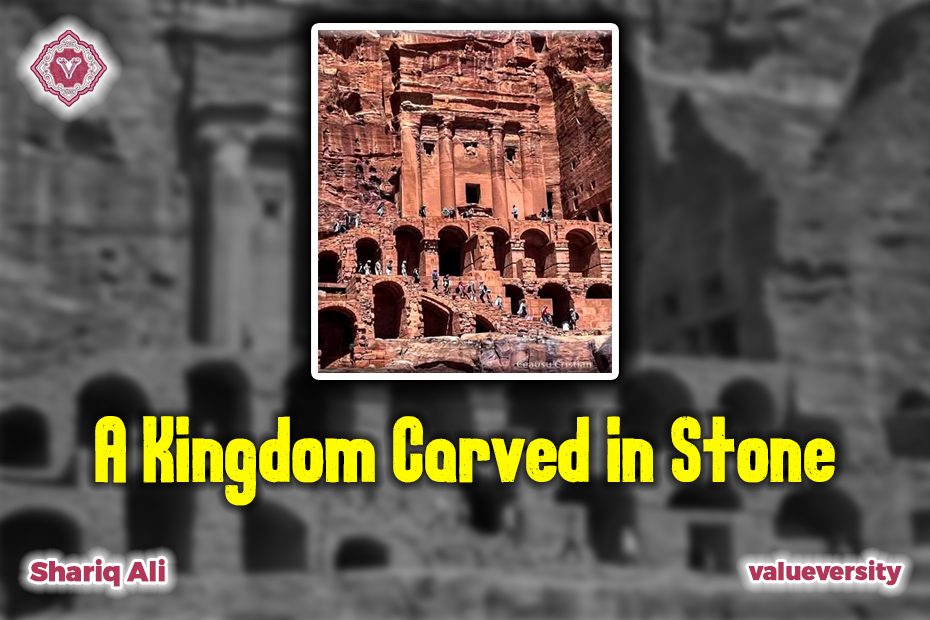
Hidden among the rugged mountains of Jordan lies Petra — that wonder of the world which pulls a person centuries back at first sight. The royal tombs carved into the rose-red cliffs are not merely graves; they are silent testimony to a civilization that breathed life into stone.
During the 1st and 2nd centuries CE, the Nabataean civilization displayed craftsmanship here that still leaves visitors astonished. Aligned on Petra’s eastern face stand the Urn Tomb, Silk Tomb, and Corinthian Tomb, each with its own character. At times you see Hellenistic-style columns, at times the arches of Rome, and at times the calm dignity of native Nabataean art — as if three eras of history have blended into one rock.
The Silk Tomb, with the colorful waves in its stone layers, seems as though a painter has brushed his colors across it.
The Urn Tomb feels regal with its towering entrance and spacious terrace.
And the Corinthian Tomb, wrapped in Greek elegance, stands as if declaring to the ages:
“We too once witnessed the world.”
Petra was never just a city. It was a gateway of trade between Arabia, Egypt, Rome, and the East. Caravans halted here, selling salt, spices, and perfumes before continuing their journeys. It was the nobles of those days who built these tombs — and even today, their silent stones reveal the grandeur in which the Nabataean rulers lived.
Even under centuries of dust, these tombs appear fresh, as though time itself stepped softly around them. Every stone in Petra’s mountains teaches us that civilizations fade, but their art and skill never truly die.